I spent some time these last few months in conference rooms. At Morningstar’s Investment Conference (MICSA), 10x, and Sanlam Glacier’s investment day. Listening to some of the sharpest minds in the industry try to make sense of markets that feel, all things considered, genuinely confusing right now. Bond yields climbing. AI valuations that half the room thinks are a bubble and half thinks aren’t. A rand that’s held up far better than it has any right to. And a political landscape at home that keeps getting described as “unprecedented.”
Here’s my honest take after digesting all of it: very little of this is actually new. It just feels new because we’re living through it in real time.
Stock Market Performance

“Source: Morningstar Wealth / Clearnomics, as at 31 August 2026.”
The global backdrop: a story bigger than a handful of tech stocks
Let’s start global. Emerging markets delivered over 38% in the first half of this year, more than triple developed markets’ 10%. That’s not the US “disappearing,” as Morningstar’s Rone Swanepoel put it at MICSA, it’s leadership broadening out. The AI trade, too, has stopped being a story about five American companies and started becoming a genuine global capital-spending cycle: chips, power infrastructure, commodities, and markets on every continent are now plugged into it.
Which brings me to the debate everyone in every one of those rooms wanted to have: is AI a bubble?
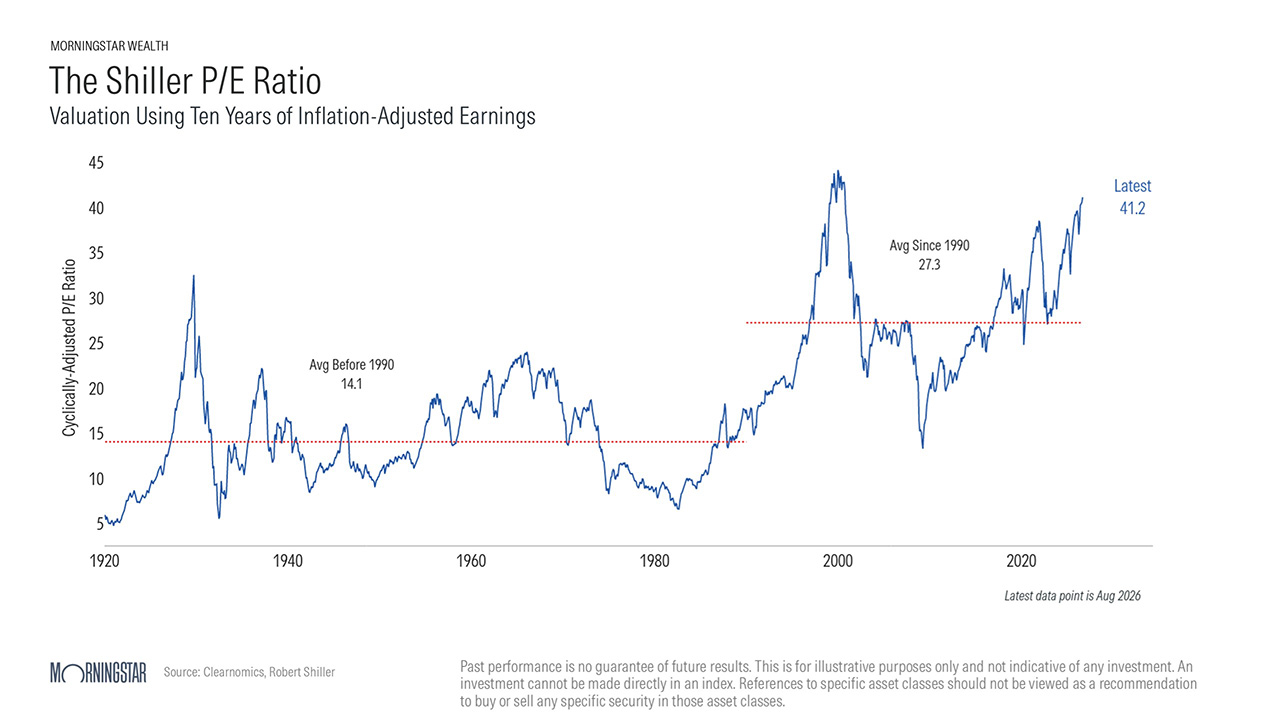
Truth is, nobody agreed. Some panelists argued that if it were a bubble, we’d already know it. Bubbles, they said, are usually obvious in hindsight but invisible while you’re standing in them, and the fact that we’re still debating it proves we’re not there yet. I’m not fully convinced by that logic (a debate happening publicly doesn’t mean the underlying excess isn’t there), but what I do agree with is this: semiconductor earnings look genuinely stretched, and a meaningful chunk of the “growth” being priced into the biggest names is arguably not sustainable at 40%+ a year, indefinitely, with no historical precedent for it.
The Shiller P/E Ratio
“Source: Morningstar Wealth / Clearnomics, as at 31 August 2026.”
Where it gets interesting is what that means practically. The best ideas coming out of these panels weren’t “avoid AI” — they were “look sideways.” Caterpillar, benefiting from the same infrastructure spend but trading at roughly half the multiple of the trillion-dollar names. Eli Lilly, using its clinical data and AI to accelerate drug discovery. Even a case for China, mispriced relative to its own compute and energy footprint.
Global Equity Valuations

“Source: Morningstar Wealth / Clearnomics, as at 31 August 2026.”
This week’s numbers gave us a live, real-time example of exactly this kind of underlying stress: Oracle reported a $664 billion AI-driven cloud backlog in the same week the US 10-year Treasury yield brushed up against 5% and American CPI came in hot. Big builders, expensive money, nervous bond markets, all at once. That’s not a crisis. That’s a market trying to price a genuine structural shift while the cost of capital rises under it. (And this is exactly the kind of thing I dig into properly in a piece I’m publishing shortly — Returns, Costs & Where Is My Wealth — which looks at what actually happens to your return when you’re paying more for the same index exposure than you think you are.)
Concentration is the quieter risk
One thread that ran through both MICSA and the Glacier panel: a lot of portfolios are more concentrated than their owners realise, simply because they’re built on indexes. A Korean index loaded with a handful of massively re-rated names. A broad emerging-market tracker that’s really a Taiwan-and-Korea semiconductor bet in disguise. None of this is wrong — but “diversified” and “index-tracking” aren’t automatically the same thing, and that’s worth genuinely sitting with.
I challenged our one manager, Mark from OMBA, on this as they use ETFs solely in their portfolios. He agreed but said that is why ETF selection is vital. If you’re buying broad market ETFs then you get this exposure, but if you’re selective in your choice then you can take known market risk instead of doubling down on unnecessary exposure.
Just to avoid panic or massive concern, this concentration is a risk for short-term volatility but doesn’t present a fundamental issue in any of your portfolios. This is just something to understand around how market reactions could cause larger swings in one’s portfolio.
Closer to home: an economy in a squeeze, and a politics that’s already changed
Locally, the numbers from this week aren’t flattering. SA’s economy contracted 0.2% in the second quarter — the first contraction after six straight quarters of growth — with annual growth slowing to 0.9%. Mining fell 7.5% year-on-year. The current account swung to a R205.5 billion deficit as our trade surplus narrowed. None of this is catastrophic, but it lines up precisely with what Nicky Weimar was telling the MICSA room a few weeks back: momentum built on collapsing imports and rate-cut relief was never going to be durable once inflation started eating back into disposable income.
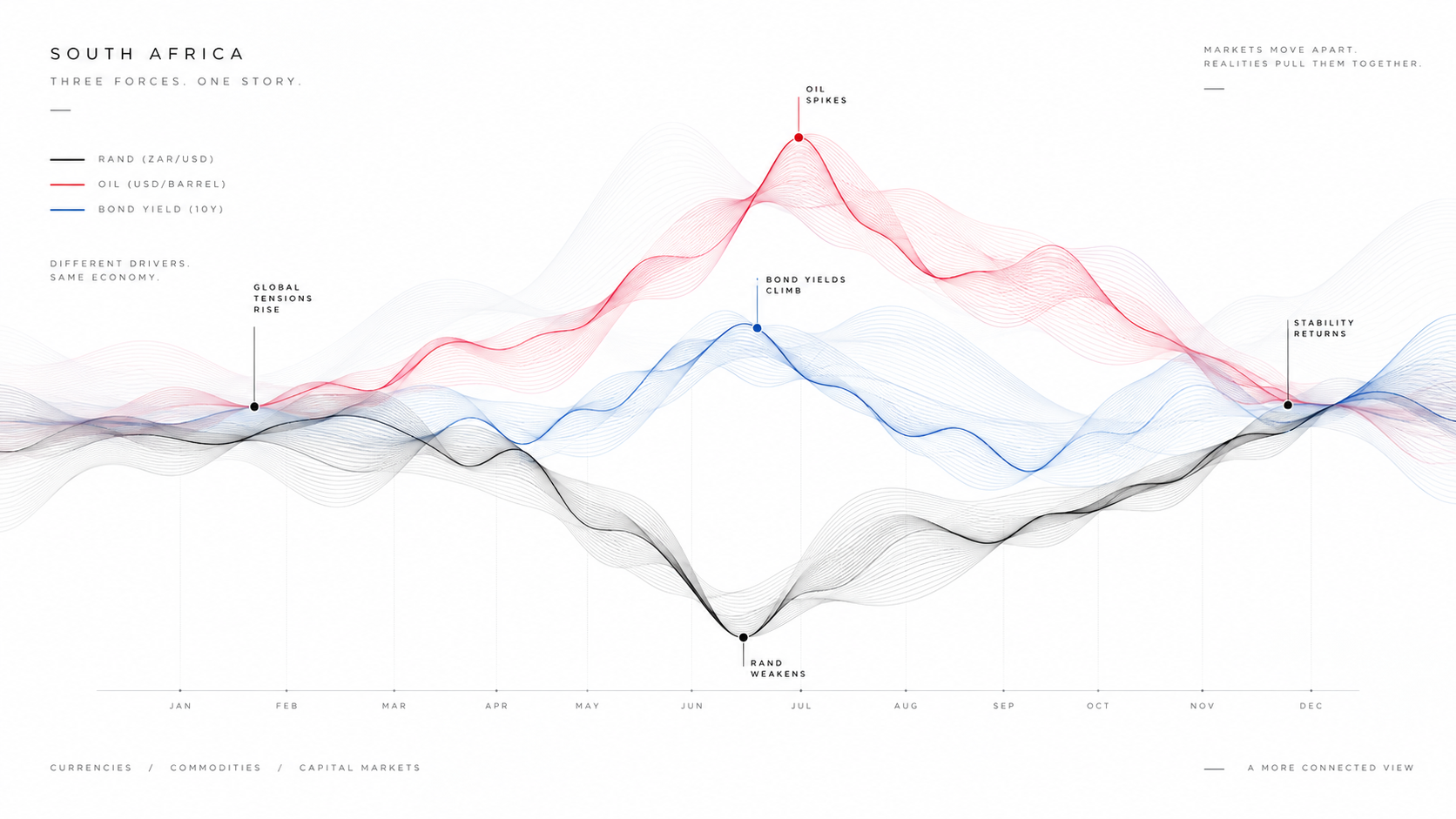
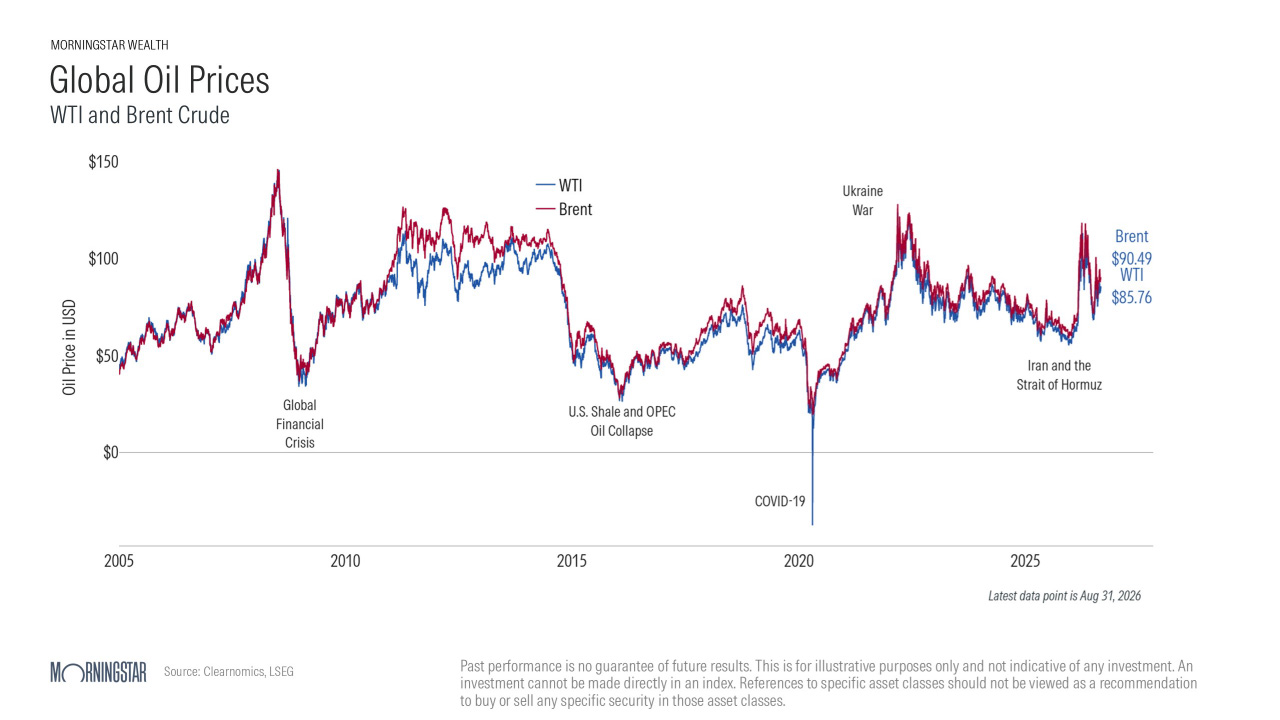
And then there’s oil. Weimar’s framing at MICSA was that the US-Iran standoff and the Strait of Hormuz risk would keep energy markets genuinely volatile. Neither calm, nor resolved, but stuck in what she called a “purgatory” of escalation and de-escalation. This week proved her right: Brent jumped over 8% in a single week, briefly touching $110, on exactly the supply-risk fears she’d flagged. High diesel costs land hardest on our exporters, who are already fighting Chinese and Indian competition on price. It’s one more reason the rand slipped from around R15.97 to R16.16 against the dollar over the week, just our currency absorbing a global shock, the way it’s designed to.
Global Oil Prices
South African Rand

“Source: Morningstar Wealth / Clearnomics, as at 31 August 2026.”
On politics, let’s be honest, the headlines make SA’s coalition landscape sound chaotic. I’d frame it differently. We’re settling into an era where no single party dictates terms from head office, locally or nationally, and where competing parties keep each other honest (well we can hope). We’ve already lived through exactly this kind of “unprecedented” moment once, in 2024, when the GNU formed. The lesson from that event, and from the market reaction to it, is the same lesson the Glacier panel drew from Brexit and the first Trump election: consensus forecasts get big political moments wrong more often than we’d like to admit, and good investing means being positioned to cope with that, not trying to predict the outcome.
There’s a sharper version of this same “history rhymes” lesson from the equity side. Sasol spent years trading as an “uninvestable” stock once ESG concerns and a low oil price parked it at a 3-5x forward PE. Then oil spiked past $100 in March, and suddenly the same company was generating a 30-50% free cash flow yield. The stock didn’t change. The story everyone had convinced themselves of did. That’s the whole game, really, staying open to revisiting your own conclusions when the facts underneath them move.
There’s an even fresher example of this same lesson, and it happened this week. The US Federal Reserve hiked rates for the first time since 2023 — 25 basis points, taking the target to 3.75%–4.00%, unanimously. Here’s what makes it worth your attention: Kevin Warsh was put in charge of the Fed earlier this year specifically because Trump wanted a chair who’d cut rates aggressively, after months of public pressure on his predecessor to do exactly that. Instead, with inflation running hot off the oil shock, Warsh hiked anyway. Say what you like about the politics of it — the bond market doesn’t take instructions from anyone, president included. When the data says rates need to rise, they rise, regardless of who put you in the job or what they expected from you.
Fed Funds Futures Implied Rates

“Source: Morningstar Wealth / Clearnomics, as at 31 August 2026.”
And it’s not just Washington. Our own Reserve Bank faces the same test in a matter of days. The MPC only just held rates at 7% in July — four members voted to hold, two wanted to hike already, with oil already pushing $100 a barrel at the time. The committee meets again on 23 September, and the pressure that just forced the Fed’s hand hasn’t gone anywhere here either: diesel costs are elevated, inflation’s drifting above target, and the same “purgatory” Weimar described at MICSA is now sitting squarely in front of our own central bank too. Same lesson, closer to home — no central bank, ours included, gets to simply choose the answer it would prefer. The data decides.
South Africa 10-Year Government Bond Yield
“Source: Morningstar Wealth / Clearnomics, as at 31 August 2026.”
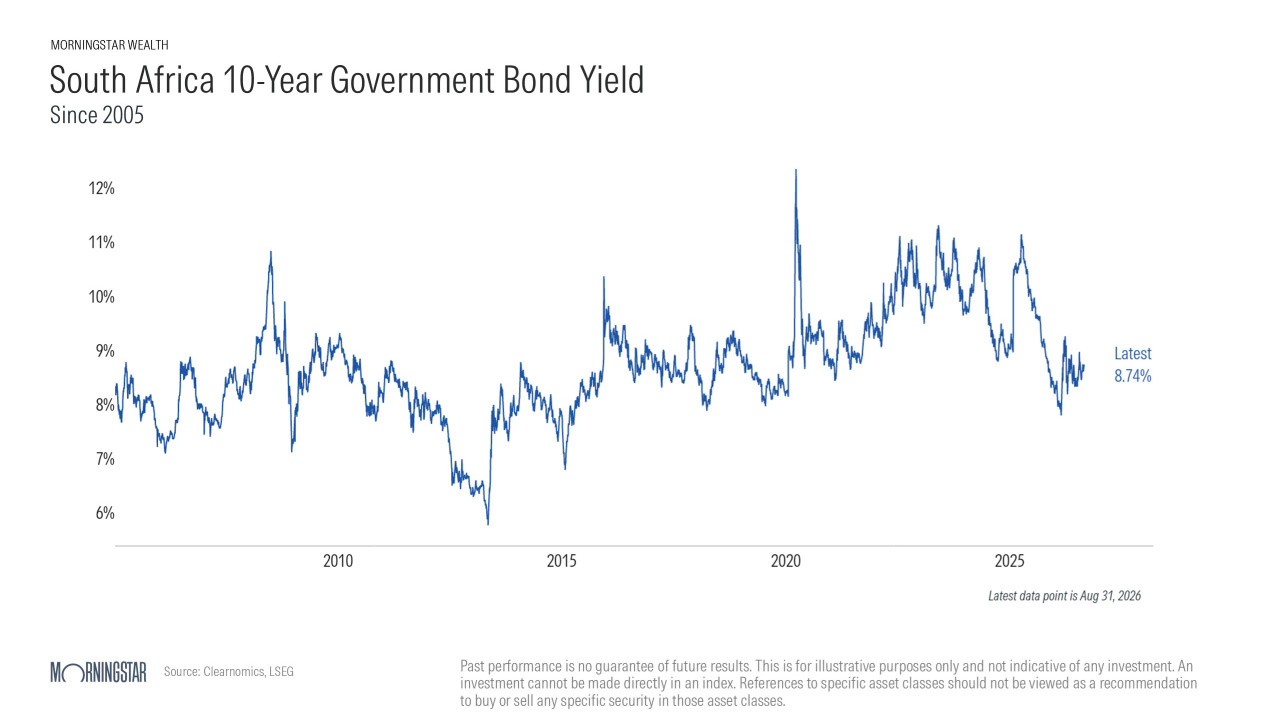
Real interest rates here remain above 4%, which is a genuinely attractive real return if you’re patient — though it also means the cost of capital for SA businesses stays high, which is its own headwind. (If you’re specifically thinking about where to put money working that hard for you before the tax year turns, keep an eye out — I’ve got a TFSA piece coming that’s timed exactly for that conversation.)
So, six conferences’ worth of expert opinion and a week of market data later, my honest conclusion hasn’t moved: this is a normal amount of turbulence, dressed up as an extraordinary amount.
My solve to remain calm, take a lesson from my own writing, stop listening to daily media. I read the weekend newspapers to catch up on in depth articles through the FT Weekend and a local paper (Sunday Times or The Star). Look in on headlines during the week from news outlets but generally stay away from the noise. That engenders a calmer disposition and head space to focus on you, my clients need from me, and my business.
Global Market Returns in Perspective

“Source: Morningstar Wealth / Clearnomics, as at 31 August 2026.”
As I wrote back in The Noise Is Loud, It Always Has Been, markets have logged 834 new all-time highs since 2002 — through pandemics, wars, and financial crises. The noise has always been loud. The plan is still the most powerful thing you have.
The question I keep sitting with isn’t whether markets are calm or chaotic this week — it’s whether I’m reacting to the loudest headline in front of me, or responding to what I actually know. That’s the discipline I’m trying to hold myself to, more than any forecast I could make about what happens next.
(This piece was written with Claude as content assistance and editor. Themes and opinions are my own and my own writing is included)